Tuesday, May 2, 2017

Does Nutrition Really Matter?

The Numbers Don’t Lie

The primary driving factor in the growing rates of and the costs associated with chronic disease is diet.  The solution to this problem would appear to be simple, change our diet, yet simple and clear is far from what the public sees.  There are so many special interests associated with this problem that many different solutions confuse the issue.

The best way to answer this question is to look at the actual research data we have regarding it.  While it has been very clear for quite some time, this is often not what the public sees.  A striking new study should bring the real answer into focus.

The study followed over 21,000 adults over 11 years.  Adherence to the Mediterranean and Paleo dietary patterns were assessed. 


Death rates from cancer, cardiovascular disease and from all causes were compared between those with the highest and lowest quintiles (highest 20% to the lowest 20%) of adherence to these two diets.  The results were striking with high adherence to the Paleo diet reducing deaths from 22-28%, while high adherence to the Mediterranean diet reduced risks 32-37%.

The comparable prevention rates of death from about any cause associated with chronic disease is very telling.  The tale is that bad diet drives the risk of death from a broad group of diseases, and good diet offers broad protection against this same spectrum. 


If these results could be produced from a single drug, it would be hailed as a great medical breakthrough and many would be standing in line to get it.  It would also be very expensive and would have its limitations as every drug has been found to. 

For example, improvements in delaying the complications of type two diabetes (TTDM) have been made with the ever-evolving group of medications targeting the disease.  The complications include diseases that diabetes drives such as stroke and heart disease.  While the advances in drug therapy have pushed back these complications by a decade or so, they are simply delayed and will eventually occur.  The problem is that while the complications can be delayed a decade or so, the age of onset of TTDM has plunged from 56 years of age to 40 years of age over the past 40 years.


It is simple math, if you push back the complications associated with a disease by a decade or so but the disease is occurring a decade and a half earlier in life, the battle is being lost.  The real elephant in the room here is that no medication has made any progress with preventing diabetes.  That can only be done with diet.

The only fail-safe solution can be as it always has been – to fix the factors that cause the disease in the first place.  Diet and exercise are the two factors that most associate with risk with diet being the strongest by a long-shot. So, does nutrition really matter?  In fact, as this study shows, it literally is a matter of life and death.


Whalen et al.  Paleolithic and Mediterranean Diet Pattern Scores Are Inversely Associated with All-Cause and Cause-Specific Mortality in Adults.  Journal Nutrition, 2017.

Monday, March 27, 2017

Helping You Eat Healthier Restaurant/Farm Review #17

Helping You Eat Healthier

                         Review #17

Welcome to our seventeenth review of restaurants and farm markets in our healthy eating series. This is a great restaurant that serves up creative delicious dishes showcasing local seasonal produce or seafood. They were listed on "13 Best Brunch Places in Virginia" in Virginia Is For Lovers Travel Blog

                                                     __________________


_________________________________________________________

Bay Local Eatery
_________________________________________________________


Bay Local Eatery was established with the local community in mind; everything they serve is made in-house using locally sourced produce, meats and seafood. They like to describe their culinary style as "Coastal Southern", taking advantage of everything that the region has to offer. Bay Local Eatery prides themselves in making everything fresh and in-house every day while never pulling anything out of a bag and putting it into a fryer. They love to be creative in the most delicious way possible.

Bay Local's menu was inspired from a collection of family recipes and local favorites. They have a brunch and dinner menu; on these menus you will find many deliciously creative items. The brunch menu includes items such as appetizers, house favorites, omelets, benedicts, burgers, sandwiches, lettuce wraps and salads. Their dinner menu includes items such as shareable appetizers, house favorites, tacos, fresh chowder of the day, lettuce wraps, burgers, sandwiches and salads. They do have some gluten-free and vegetarian items on their menu and you are also able to substitute your bun to a gluten free bun for a small extra charge. Their menus also offer a couple cold press juices such as the Exotica that consists of apple, orange, kiwi, carrot, melon, strawberry and mint. Some favorite dishes on the menu are any of the benedicts; the favorite benedicts are the garden bennie, crab cake bennie and the bay local bennie. Another favorite item on the menu is the Bay Three Way, an assorted platter or homemade chicken salad, tuna salad, hummus, arugula, mixed greens, vegetables and fruit with garlic toasted pita points. Their menu changes with the season and features "fresh-ials" which are fresh specials that showcase seasonal produce or seafood. You can find the "fresh-ials" on the chalkboard in the restaurant offering delicious specials for the day.

For a great delicious meal with a warm and welcoming vibe, be sure to check out Bay Local Eatery. Since the ambiance is charming, warm and inviting, it is usually pretty busy and can be a little loud from everyone's laughter, but it is still an enjoyable meal! They are located at 2917 Shore Drive in Virginia Beach. They serve brunch 7 days a week from 7:00am-3:00pm, and dinner Thursday through Saturday from 5:00pm-11:00pm. Also a second location will be opening up soon in the spring in the Linkhorn Shoppes on Laskin Road in Virginia Beach.


 For more information about Bay Local Eatery give them a call at 757-227-4389 or visit their website at http://baylocalvb.com/

Wednesday, March 22, 2017

Diet and Disease

State of the Art 2017

The hallmark of good healthcare is that it is “evidence-based”.  This simply means that decisions in care and preventative strategies are largely based on quality scientific evidence rather than empirical information.  This is not to say that empirically based knowledge, that based only on practical experience, is not important but that scientifically derived evidence tends to be more accurate in the long run.


Regarding diet, we are emerging from 3 to 4 decades of “this seems to make sense”, rather than evidence-based decision making.  Unfortunately, the common advice has proven quite inaccurate and somewhat contributory to the greatly increasing rates of some chronic diseases such as diabetes.

Given the above state, I thought it was appropriate to celebrate “National Nutrition Month” with a look at the evidence-based knowledge that we have concerning the relationship between diet and disease.  The most striking realization has been that the low fat focus of the past 30-40 years has not only been ineffective in preventing the chronic diseases it was touted to be a solution for, it actually has been contributing to the increased development of most of these very diseases.  There are several reasons for this:

·         Low fat means higher carbohydrate
·         A low fat diet has never been shown to lower blood lipids
·         The low fat/high carb diet causes greater weight gain than comparative diets
·         The low fat/high carb diet causes a greater shift to a disease-causing blood lipid pattern

A little background is necessary to understand this important error that cost Western Nations 30 years of good dietary understanding.  In the 1950’s a physiologist named Ancel Keys reported that in his study of seven western countries, a higher total and saturated fat diet was associated with greater heart disease risk. The problem was that Keys actually studied data from 29 countries but “proved” his theory only reporting that from 7 countries and omitting that from the 22 countries (76%) that found no relationship.  Extensive scientific review has now found this study inaccurate and misleading:

“There is now probably unanimous consensus in the scientific community about this study - it is faked, since Dr. Keys cherry picked just 7 countries. He had data of 22, and when statistical methods are applied - there is no significant relationship between dietary fat consumption and heart disease.”

The reasons why the medical community, which prides itself as being “evidence-based”, dispensed erroneous advice for 3-4 decades are complex.  They are generally looked at as the top source of nutritional advice for disease prevention, yet many studies examining their training and ability to do this suggest otherwise.

A study published in 2006 of over 2300 medical students at 16 representative medical schools found that 72% beginning medical school thought that nutritional counseling was “highly relevant” to medical practice.(1)  By their final year the number had dropped almost in half to 46%.  Only 19% thought that they had been adequately trained to provide this advice, and only 17% reported to doing so with their patients.

A prior study examined the knowledge of internists and cardiologists about the impact of diet on blood lipids.  Eighty-four percent of cardiologists and 96% of internists did not know that a low fat/high carb diet would raise blood triglyceride levels.  Similarly, 70% of cardiologists and 77% of internists did not know that this diet would lower HDL, or good cholesterol.

The problem is that medical education is devoid of nutritional education instead focusing on other areas of concentration.  Nutrition science has not filtered into that training, yet the public perception is that this is where nutritional advice should be available. 

This domain should default to specifically trained individuals well versed in nutritional science, but many barriers to this remain in the system.

The thought process that has led to the standard low fat diet advice for the past 3-4 decades was an oversimplified assumption that the fat responsible for arterial plaque must be generated by dietary fat.  However, the higher carbohydrate dietary pattern that this assumption created actually causes a more risky shift in blood lipid patterns than does a higher fat, lower carbohydrate pattern.

In reality, any energy in excess of immediate need is sent to the liver to be converted to fats as that is the primary energy storage form that humans use.  The sugars from a higher carbohydrate diet have been shown to increase liver triglyceride production, lower HDL production, increase LDL or bad cholesterol production and cause a shift in the LDL particle size to a smaller, more plaque-forming variety.  This combination of changes is the one that causes the greatly increased vascular disease risk in diabetics.

The increase in LDL production associated with a higher carb diet occurs because this diet causes higher insulin levels.  Making cholesterol in the liver requires energy availability, and insulin is a potent signal of energy availability.

Most major bodies that set guidelines about dietary behavior have recently revised their positions stating that the dietary high fat hypothesis has not proven true.  They also suggest that the low fat diet preoccupation has pushed us to a higher carbohydrate diet that has been a potent driver of the obesity and diabetes epidemic. 

Diabetes is of particular concern as vascular complications remain the dominant cause of associated disease and deaths.  Fuel to this concern was added recently by a study that looked at carotid artery plaques in obese and non-obese subjects.  While high dose statin therapy lowers plaque volume by 4.2% in non-obese subjects, obese subjects had it increase 4.8% in 12 months despite lowering of LDL.(3)  Other factors besides LDL contribute to plaque formation including inflammation and glycation, or direct sugar damage to tissue.

The lesson to deduce from the evidence-based look at the current research on diet and disease is that we are generally ill suited to the dietary pattern of the last 30 to 40 years.  While humans thrived on a diet of about 30% protein, 40% fat and 30% complex carbohydrate for the first 6 million years, the current shift to 15% protein, 25% fat and 60% carbohydrate has resulted in growing rates of a number of chronic diseases that have a metabolic basis. The high percentage of total carbohydrate has been further complicated by the dominant amount being refined and with added simple sugars.

So the knowledge base we have concerning diet in 2017 looks very different from the commonly recommended dietary pattern of the last 40 years.  Now we face the difficult task of actually implementing that change, but the motivation is that the stakes are high.


1)    Spencer et al.  PREDICTORS OF NUTRITIONAL COUNSELING BEHAVIORS AND ATTITUDES IN U.S. MEDICAL STUDENTS.  Am J Clin Nutr, 2006;84:655-662.

2)    Flynn et al.  INADEQUATE PHYSICIAN KNOWLEDGE OF THE EFFECTS OF DIET ON BLOOD LIPIDS AND LIPOPROTEINS.  Nutri J, 2003;2:2-4.

3)    Sandfort et al.  OBESITY IS ASSOCIATED WITH PROGRESSION OF ATHEROSCLEROSIS DURING STATIN TREATMENT.  J Am Heart Assoc, 2016;5:e003621.

Monday, March 20, 2017

Helping You Eat Healthier Restaurant/Farm Review #16

Helping You Eat Healthier

                         Review #16

Welcome to our sixteenth review of restaurants and farm markets in our healthy eating series. This is a great farmers market to visit to get a great start on your weekend. Walking around, talking to neighbors and local businesses while getting fresh vegetables or meats to take home to prepare a wonderful weekend meal sounds like a great morning!

                                                     _______________________


___________________________________________________________________________

Shore Drive Farmers Market
___________________________________________________________________________


There is nothing better than getting your food fresh from local vendors. At Shore Drive Farmers Market you can choose from about 15 vendors who offer seafood, produce, meat, eggs, cheese, baked goods, coffee, clothing and art. Farmers markets do not only offer local food and merchandise, they also bring a sense of community. Shore Drive Farmers Market is a great place to meet the producers of our food and learn about its production. It is also a great place to meet our neighbors and socialize with our friends, all while supporting local businesses. 

Come find out what our local vendors have to offer, from fresh seafood to aromatic coffee, from colorful produce to fresh meat. You can find some of the farms mentioned in previous blogs here such as Cullipher Farm Market and Full Quiver Farm, along with many other great vendors. They are also dog friendly and have some vendors that sell organic dog treats so your fur baby can eat healthy too! Shore Drive Farmers Market is open year-round, every Saturday from 10:00AM to noon in the winter and 9:00AM to noon in the summer. They are open all year, in all weather; even if it is rainy or windy their alternative setup is under the eaves and in the hallways of the shopping center. They are located at 2947 Shore Drive in Virginia Beach in the parking lot of the Lynnhaven Square Shopping Center.


Thursday, March 16, 2017

Helping You Eat Healthier Restaurant/Farm Review #15

Helping You Eat Healthier

                         Review #15

Welcome to our fifteenth review of restaurants and farm markets in our healthy eating series. This restaurant focuses on using local ingredients and putting a modern twist on the classics. Here you can find fun and creative cuisine in a quaint atmosphere. 

                                                     _______________________


________________________________________________________________________

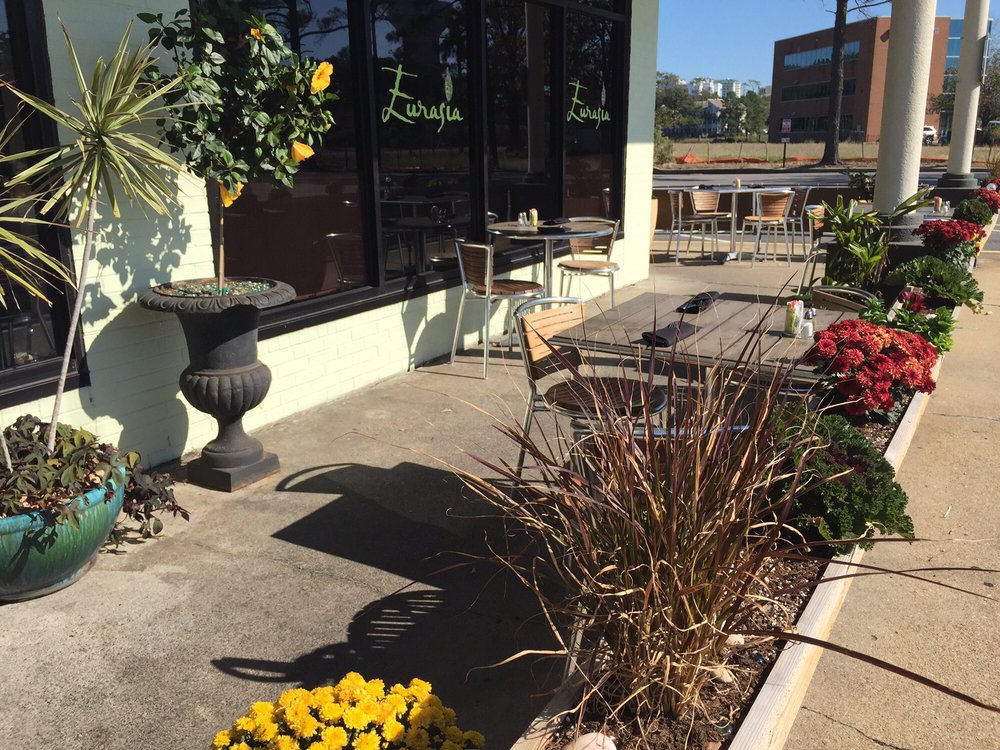
Eurasia Café & Wine Bar
________________________________________________________________________


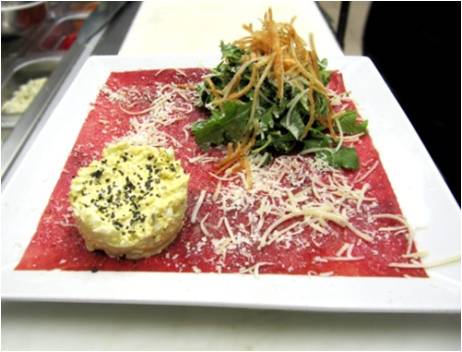
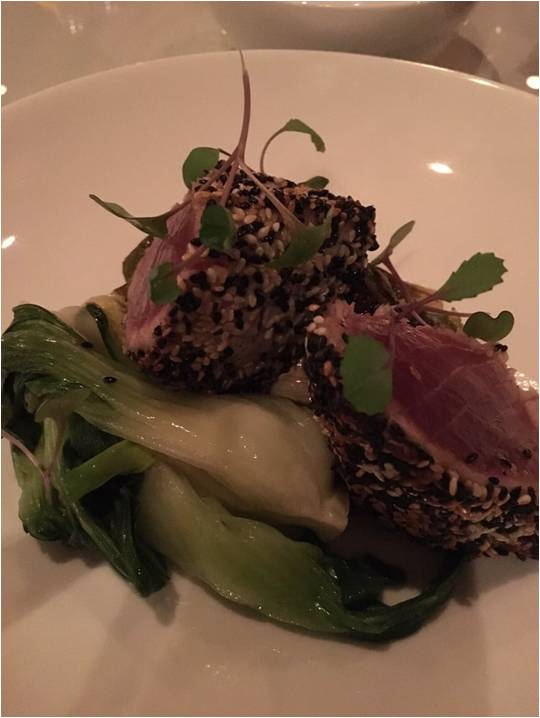
Eurasia is a New American cuisine with heavy influences from Asia, Europe and southern cooking. Eurasia's cooking is mostly distinguished by a fresh, flavorful style using local and organic products. Their food is consistently delicious with an outstanding menu that changes seasonally. The seasonal menu features the freshest fruits and vegetables from local independent farmers. The menu changes seasonally, but they do keep some house favorites all year round. The menu ranges from upscale sandwiches to creative small bites and entrees. Some specialties include Beef Tenderloin Carpaccio, Sautéed Shrimp and Gouda Grits, Pan Seared Ahi Tuna, Lobster Mac and Cheese, Vegetable Spring Rolls, Fried Eastern Shore Oysters, Oysters Eurasia and more.  

Eurasia prides itself in using fresh seasonal ingredients. Every night Monday through Friday they have a list of specials and also a Happy Hour on appetizers and drinks. They offer a "New World" inspired wine list as well as an excellent selection of microbrews. Also, because Eurasia has a wine shop attached you can pick out a bottle of wine at the shop and bring it to dinner for a corkage fee. Eurasia's atmosphere is lively yet intimate with a mix of bar seating, high bar tops, more formal low tops, and even outdoor seating when the weather is accommodating. Be sure to check out Eurasia Café & Wine Bar for a creative cuisine that is seasonal, local and fresh in a quaint atmosphere. Eurasia is located at 960 Laskin Road in Virginia Beach; they are open Monday through Thursday from 11:00am-9:30pm, Friday and Saturday from 11:00am-10:00pm and Sunday from 11:00am-9:00pm. 


For more information about Eurasia Café & Wine Bar give them a call at 757-422-0184 or visit their website at http://www.eurasiavb.com/home.

Monday, March 13, 2017

Helping You Eat Healthier Restaurant/Farm Review #14

Helping You Eat Healthier

                         Review #14

Welcome to our fourteenth review of restaurants and farm markets in our healthy eating series. This farm is known for its freshly picked, high quality produce. Whether you visit them at their stand or at a farmers market, you will not be disappointed. 
                                                     _____________________


___________________________________________________________________

Cromwell's Produce
___________________________________________________________________


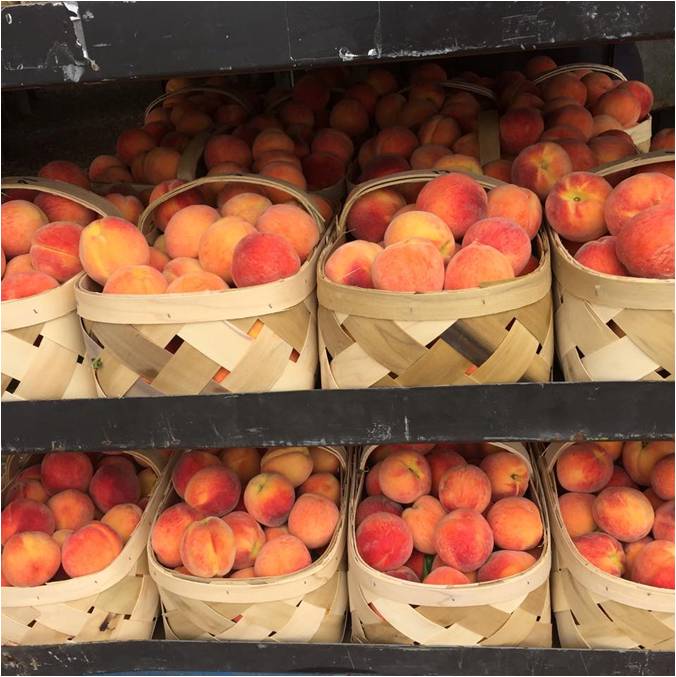
Cromwell's produce is picked fresh daily and brought directly to their stand. They offer a seasonal bounty of fruits, vegetables, honey, herbs, flowers and more. Their season begins with strawberries, beets, sugar snaps and may peas; but the real specialty is in late June with sweet corn (the corn is said to be "the best in town"), and moving into July with tomatoes and fresh shelled butterbeans. They also offer a variety of additional produce such as squash, cucumbers, snap beans, melons, greens, lettuce, melons, sweet potatoes, Christmas trees and wreaths. They also bring in special items such as delicious peaches from South Carolina twice weekly.

Cromwell's produce is largely sold at the stand and through farmers markets. Cromwell's stand is located in the Sandbridge area of Virginia Beach on their farm. They are minutes away from Back Bay Wildlife Refuge and public beaches. You can even pick your own strawberries while you are there. Their farm stand is open daily  April-December everyday from 9:00am-6:00pm. You can also find their produce on Saturdays from 8:00am-12:00pm at Old Beach Farmers Market in the Summer. 


Thursday, March 9, 2017

Helping You Eat Healthier Restaurant/Farm Review #13

Helping You Eat Healthier

                         Review #13

Welcome to our thirteenth review of restaurants and farm markets in our healthy eating series. This restaurant serves nourishing and wholesome dishes using local products and healthy, clean cooking. I was fortunate enough to talk to Ruzie; she is in charge of the marketing at Pasha Mezze. She was able to tell me a bunch of great things about this restaurant to share with you.

                                                     _____________________


________________________________________________________________________

Pasha Mezze
________________________________________________________________________


Pasha Mezze is a Turkish restaurant with an American influence, their menu is full of Old World recipes made with healthy, clean cooking. Their mission has always been and still is to eventually serve 100% organic in the near future. Since certified organic food is hard to find, they try to get as much organic food as they can. They want their dishes to be nourishing and wholesome, so cooking is done the old fashioned way. Their produce is from local farms, everything is made from scratch, no preservatives, no food additives, no canned food and no trans-fat used.  

Pasha Mezze's menu shows that healthy can be tasty. Some items that you would find on their menu are soups, salads, wraps, sandwiches, hummus, sampler platters, and entrees. They also offer brunch on Saturdays and Sundays from 10:00am-3:00pm, which will include eggs and omelets, brunch signatures, plus the lunch menu. Pasha Mezze offers a lot of vegan, vegetarian and gluten free choices. The menu will tell you what is gluten free, although if you see something on the menu that you want and it is not gluten free, you have the option to make it gluten free, just let them know and they will take care of you. They have a few award winning dishes such as their hummus, red lentil soup, red lentil cake and baklava. They try to add some items to their menu about every six months; they also have specials sometimes such as Farmer's Market specials, and holiday specials such as Valentine's Day and Mothers Day.

If you are looking for a health conscious restaurant go to Pasha Mezze; they are located at 350 W 22nd Street in Norfolk and open Monday through Friday from 11:00am-9:30pm and Saturday and Sunday from 10:00am-9:30pm. They also sell retail; you can buy some of their products at Whole Foods, Organic Food Depot and The Heritage Food Store. They also have a PIP (Pasha's Important People) membership card. This card is free, all you have to do is fill out a simple form and then you can start earning points each time you shop. Once you spend $100 with them, they give you $15 back, and you will also be receiving e-mails in which they send coupons, discounts or other updated information about the restaurant and events. Also, you can follow their Facebook page https://www.facebook.com/PashaMezzeNorfolk to catch up with specials, live music, etc. 


For more information about Pasha Mezze give them a call at 757-627-1318 or visit their website at http://www.pashamezze.com/

Getting a Grip on Our Toxic World

In an interesting presentation at the 2018 Integrative Healthcare Symposium in New York City, Joseph Pizzorno, ND, a leading expert on tox...